- Home
- Capabilities
Six processes,none outsourced
Slitting, die cutting, laminating, adhesive backing, blanking, and taping all run in our own workshop. You don't shuttle drawings among a materials vendor, a converter, and a packer—tolerances and accountability stay on one line. How fine we can go is set after reviewing the drawing, material behavior, and volume; uncertain structures get sampled first.
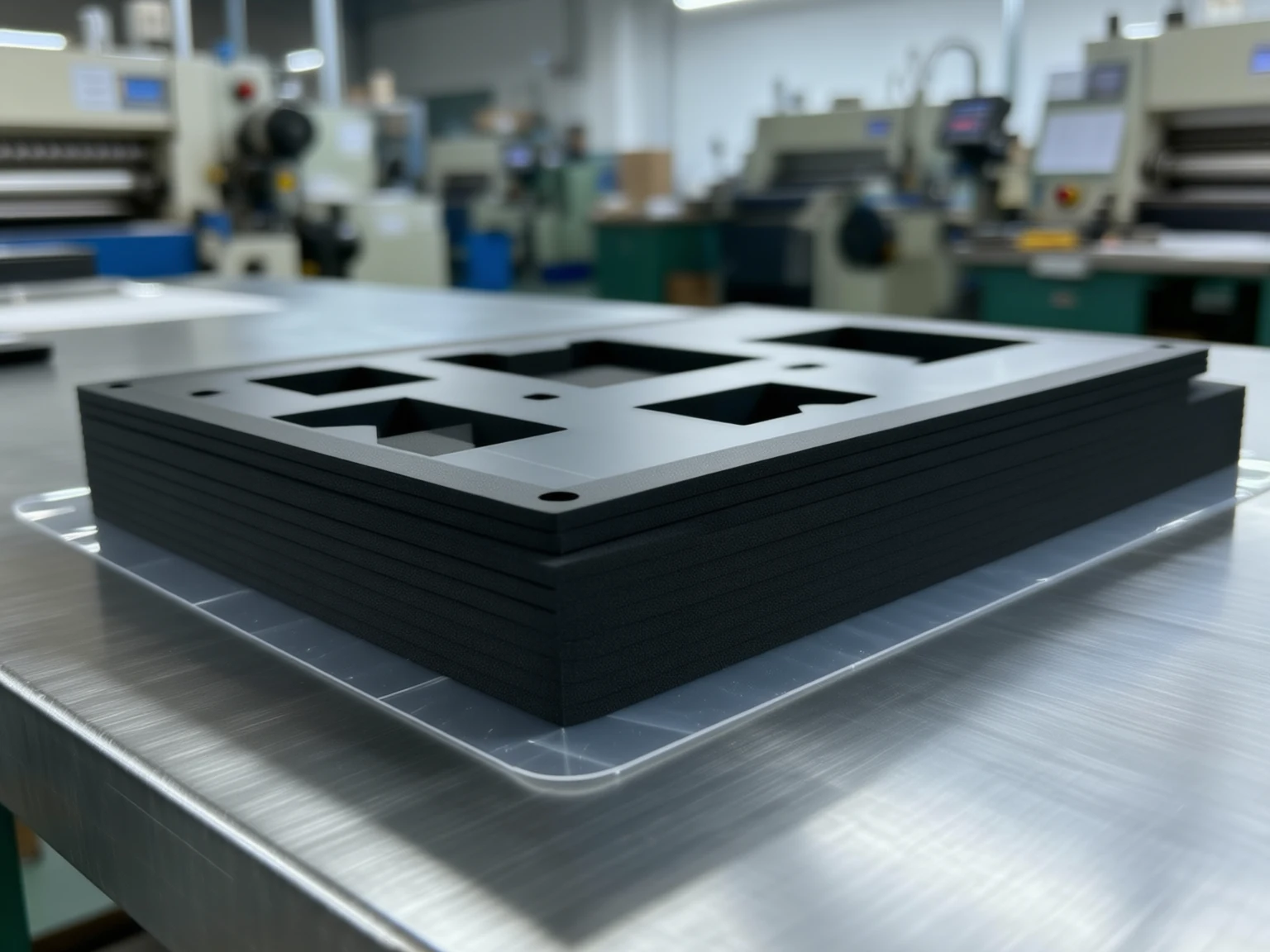
The steel rule die strokes vertically on a flatbed press—sheet and roll both work. Complex contours, inner holes, and outer frames form in one hit; kiss-cuts too—cut the adhesive only, leave the liner intact for easy peel-and-place. Nested arrays save material, but die clearance and scrap paths need planning first.
- Suitable materials
- Foam, rubber, double-sided tape, film, nonwoven, aluminum foil
- OutputForm
- Sheets, discrete parts, nested arrays, parts with finger tabs
- ConvertingBased on
- CAD drawings (DXF / DWG / PDF) or physical samples
- Kiss-cut
- Supported; depth set with shims—sample confirm before production
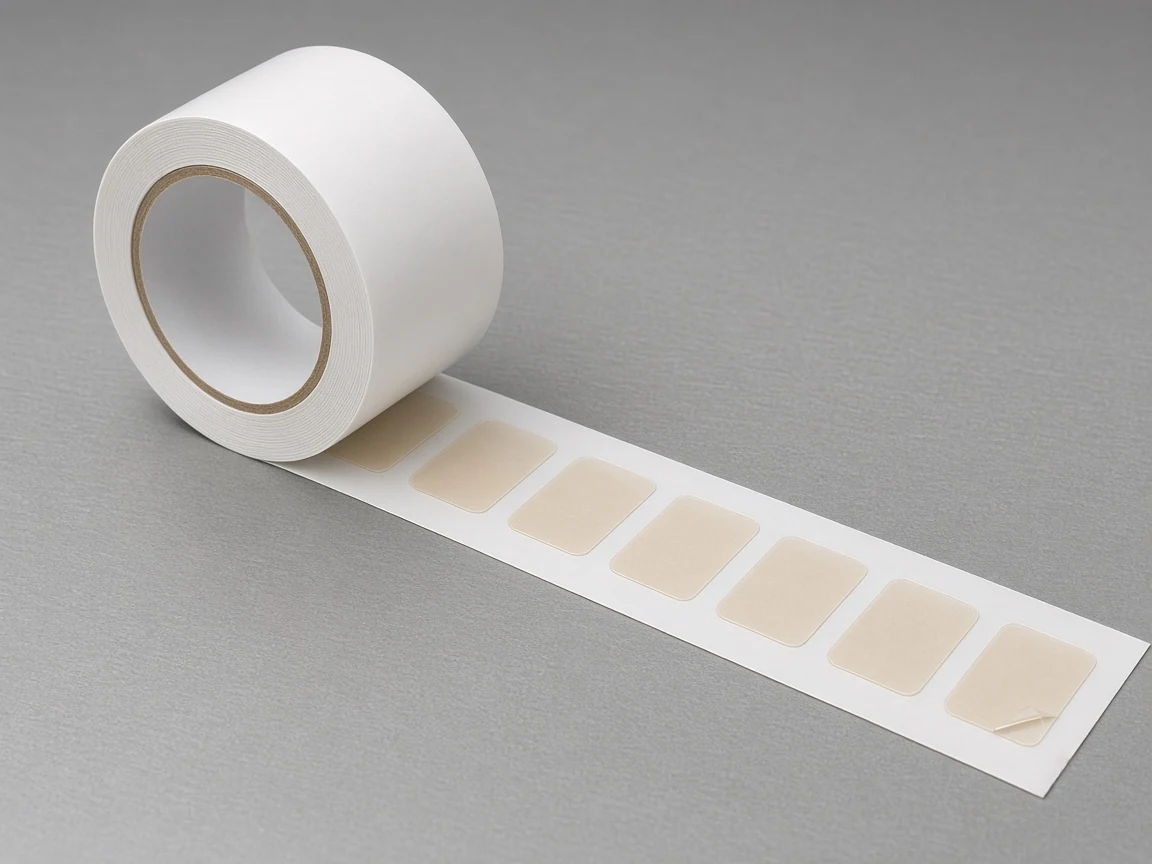
Rotary (cylinder) cutting with a continuous web—stable cycle time for long runs and annual frameworks. Unit cost falls faster with volume than flatbed, but the engraved roll is a one-time investment—when volume is low, flatbed is cheaper, and we'll say so on the quote.
- Suitable materials
- Tape, release film, thin foam, label stock, nonwoven
- OutputForm
- Roll-to-roll, roll-to-sheet
- Best for volume
- Long runs, annual contracts, ongoing replenishment
- Die roll
- Rolls tooled to print—one-time investment, amortizable into unit price
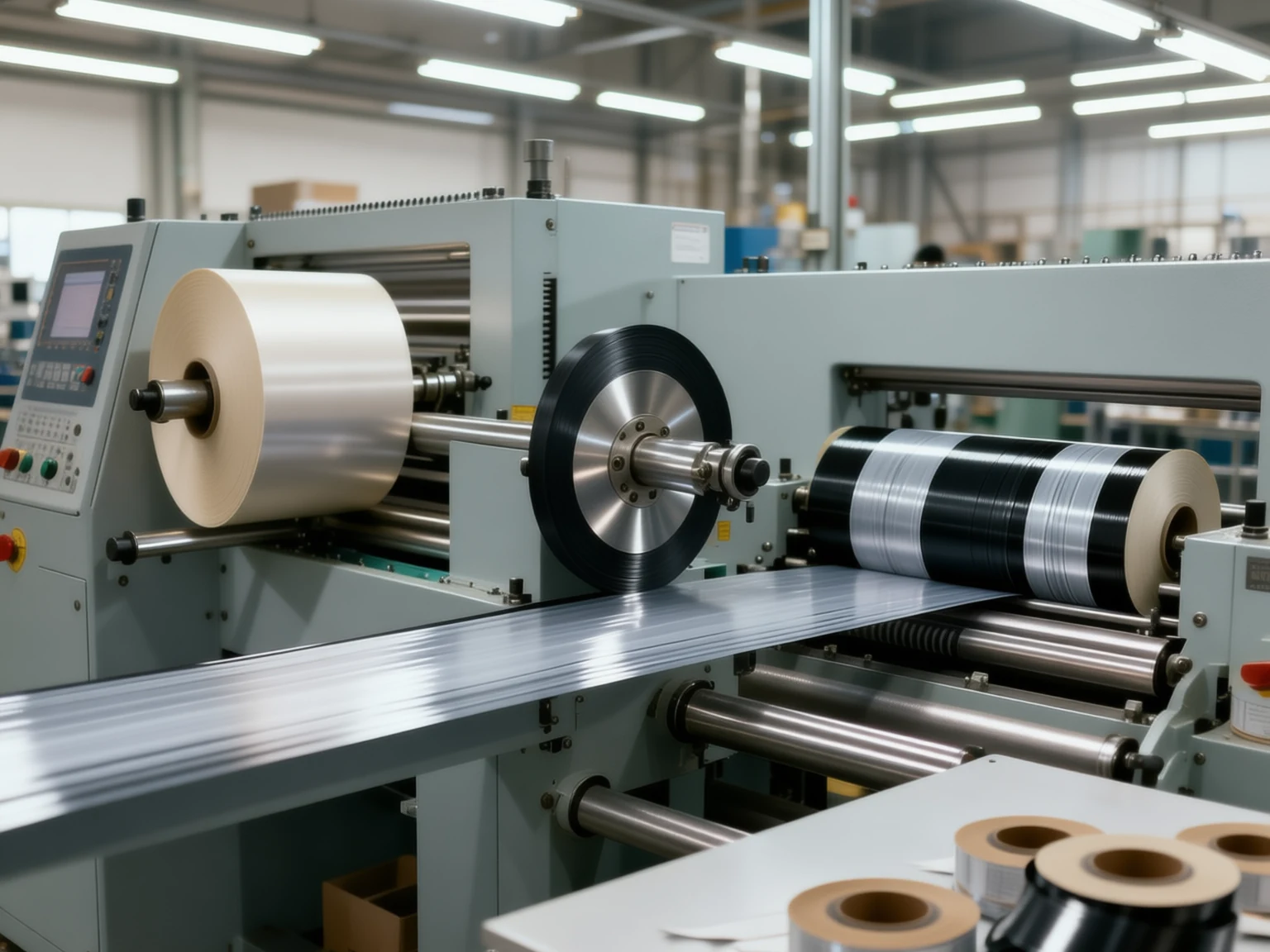
Full mother rolls slit to the widths you need—clean, burr-free edges—rewound as small rolls or stacked as sheets. When a full roll is more than you need, or the line only wants narrow strip, slitting is the leanest path—you don't pay full-roll width for strip you won't use.
- Suitable materials
- Roll goods: tape, foam, film, release liner, metal foil
- OutputForm
- Narrow rolls (rewound), stacked sheets
- Width
- Slit to need; lower width limit confirmed by material and thickness
- Edge
- Clean, burr-free; cut method chosen for the material
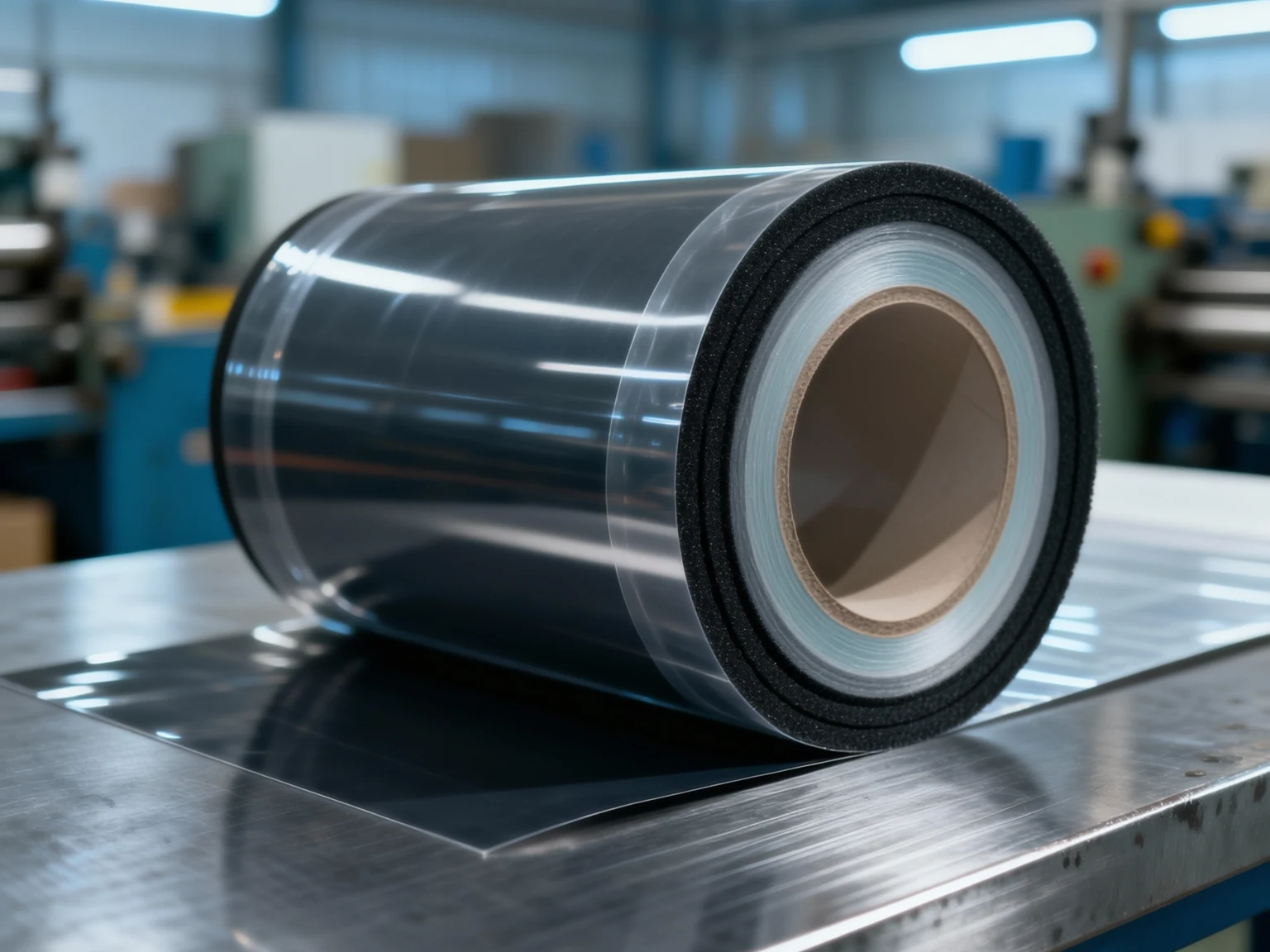
Foam + adhesive + release film as multi-layer laminates; peel tuned to your assembly—low tack for rework, high tack for one-shot permanent bonds. We can also add adhesive backing, change release liners, or laminate two materials into one sheet.
- Suitable materials
- Foam, film, fabric, nonwoven, metal foil
- Structure
- Typically 2–3 layers, set by use
- Peel strength
- Adhesive system and coat weight chosen for the assembly process
- Release liner
- Optional; release paper / film chosen for the next process
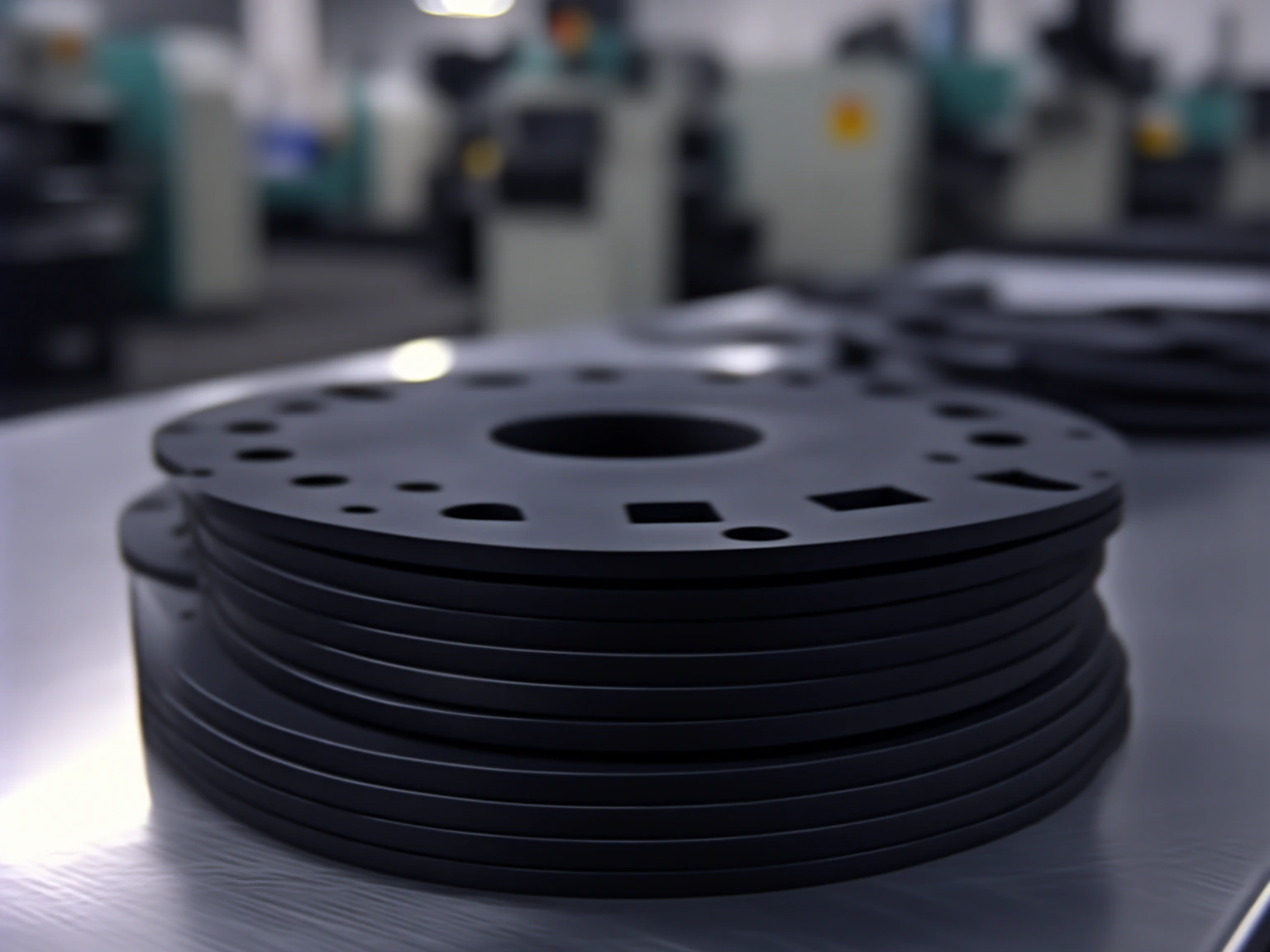
Seals, cushions, and shielding parts—from drawings or sample replication. They look simple; success is usually material selection—compression, recovery, temperature, and media resistance. A perfect die won't seal if those are wrong. We ask about conditions before recommending material.
- Suitable materials
- Foam, rubber, silicone, film, metal foil, non-asbestos
- OutputForm
- Discrete parts, nested arrays, parts with locating holes
- ConvertingBased on
- Drawing or sample (dimensions can be re-measured)
- Critical parameters
- Compression, recovery, temperature, media resistance
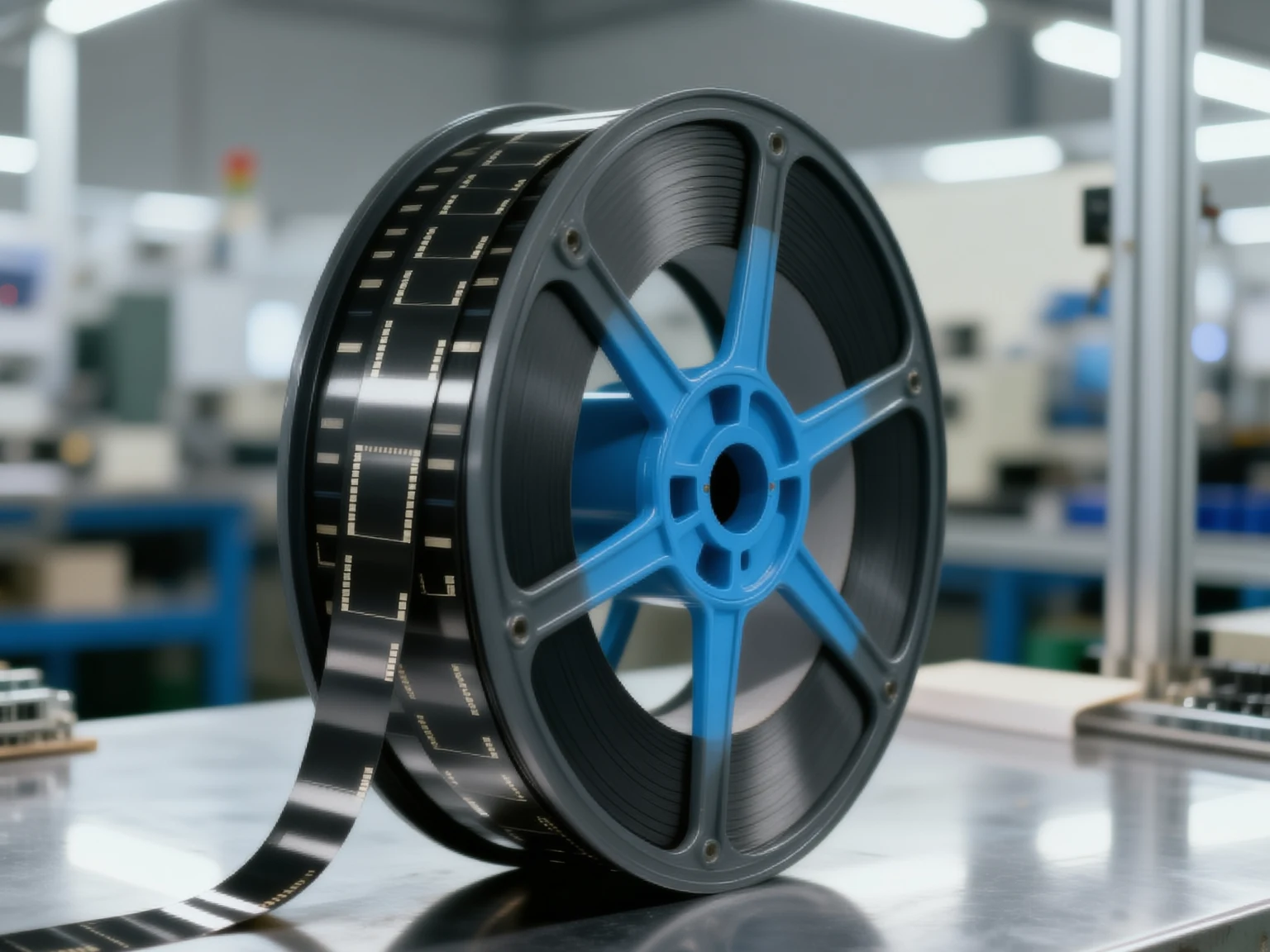
Small die-cut parts packed on reels or carrier tape go straight onto pick-and-place and automated lines—no unpacking, staging, or hand loading. Pocket size, pick orientation, and parts per reel follow your equipment parameters.
- Suitable parts
- Small die-cut parts, gaskets, insulating films, shielding pieces
- Pack forms
- Reel(reel)、Carrier tape(carrier tape)
- Interface
- Pick-and-place, automated assembly lines
- On demand
- Pocket size, pick orientation, parts per reel
Which materials run on which process
The same process behaves differently on different materials. The table below shows combinations we run often: solid dots are mature practice, open dots are possible with review, dashes usually aren't how we run it.
| Materials | Flatbed die cutting | Rotary die cutting | Precision slitting | LaminatingAdhesive backing | BlankingGasket | SpoolingTaping |
|---|---|---|---|---|---|---|
| Double-sided tapeDOUBLE-COATED TAPE | ● | ● | ● | ● | ○ | ○ |
| FoamFOAM | ● | ○ | ● | ● | ● | ○ |
| Film / adhesive filmFILM | ● | ● | ● | ● | ○ | ● |
| Rubber / SiliconeRUBBER · SILICONE | ● | ○ | ○ | ○ | ● | — |
| Metal foilALU / CU FOIL | ● | ○ | ● | ○ | ● | — |
| Fabric / meshFABRIC · MESH | ● | ○ | ● | ● | ○ | — |
From drawing to shipment
Every step has a clear deliverable—no "done but we don't know if it's right" stages.
Drawing / Sample
CAD files, sketch photos, or physical samples all work. No drawing? Ship a sample—we'll re-measure.
Review & quote
Material plan, tolerances, volume, lead time, and price in one reply.
Sample approval
First-article size, edge, and peel confirmed before production—avoids batch rework.
Production
Run to the approved sample and process; in-process sampling with retain samples.
Pack & ship
Reels, carrier tape, or stacking to your line requirements, with inspection records.
What people usually ask before converting
No drawing—only a sample. Can you still do it?
Yes. We can re-measure size and edge section, or tool from the sample directly. If the sample is an assembled part, share mounting location and conditions so we don't copy the outline and miss compression.
How is MOQ set?
Sampling from one piece; production MOQ depends on material and process—slitting by roll, die cutting by lot. Rotary needs an engraved roll, so the volume bar is higher than flatbed; if volume is low we'll suggest flatbed or slitting instead.
Typical lead time?
Usually 3–7 days, including tooling and first-article approval. Rush can compress some steps—first-article approval cannot be skipped.
Can you convert only, with our material?
Yes. Consignment converting and full supply both work. For consignment we confirm the material suits the target process first—some shed debris or delaminate in die cutting, and we'll flag that early.
Send a drawing,
see what we can do first.
Drawing + volume + lead time—we'll reply with a material plan, tolerances, and price. No drawing? Ship a sample or describe the conditions.