- Home
- Capabilities
- Flatbed die cutting
Flatbed die cutting
The steel rule die strokes vertically on a flatbed press—sheet and roll both work. Complex contours, inner holes, and outer frames form in one hit; kiss-cuts too—cut the adhesive only, leave the liner intact for easy peel-and-place. Nested arrays save material, but die clearance and scrap paths need planning first.
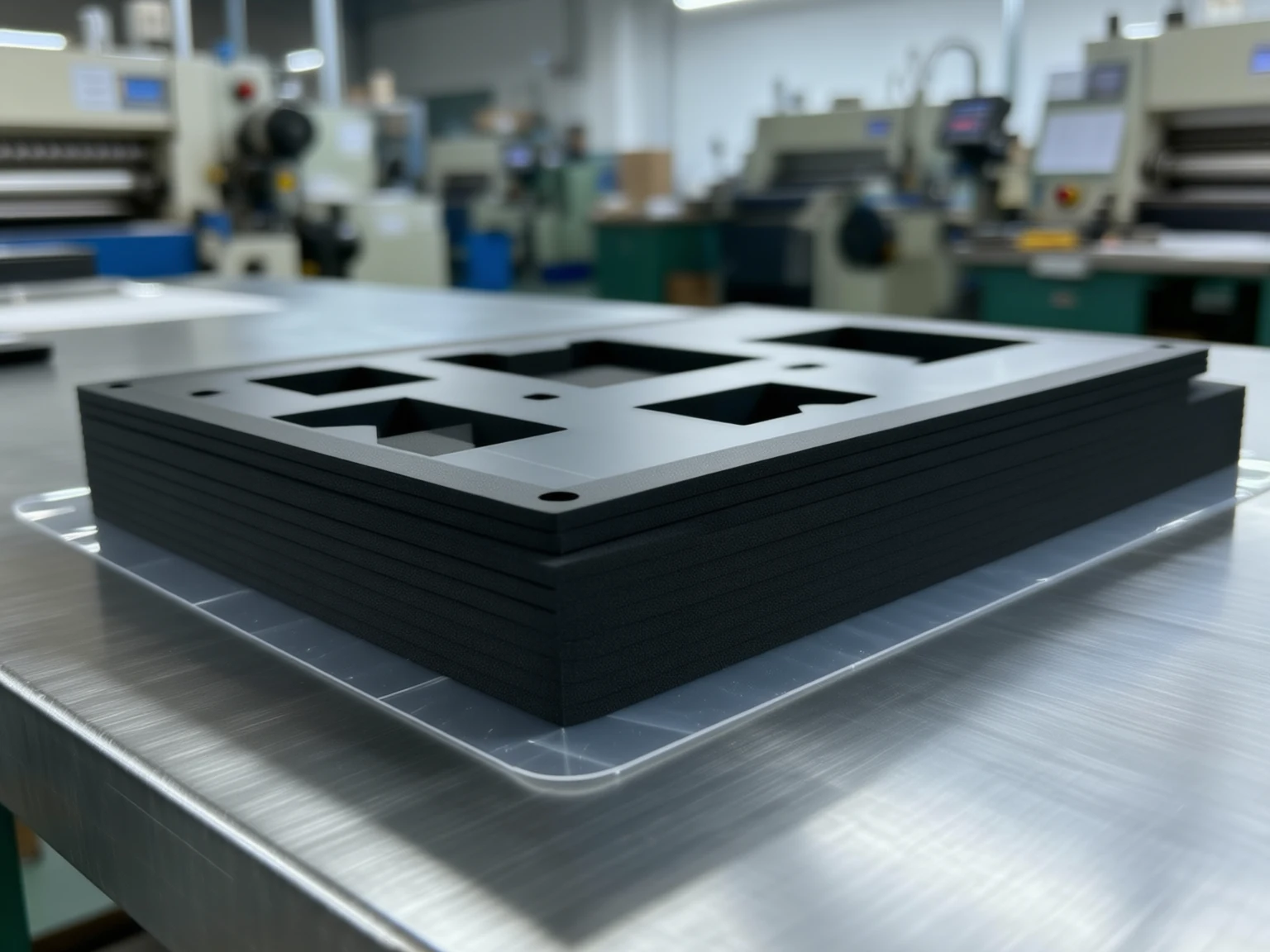
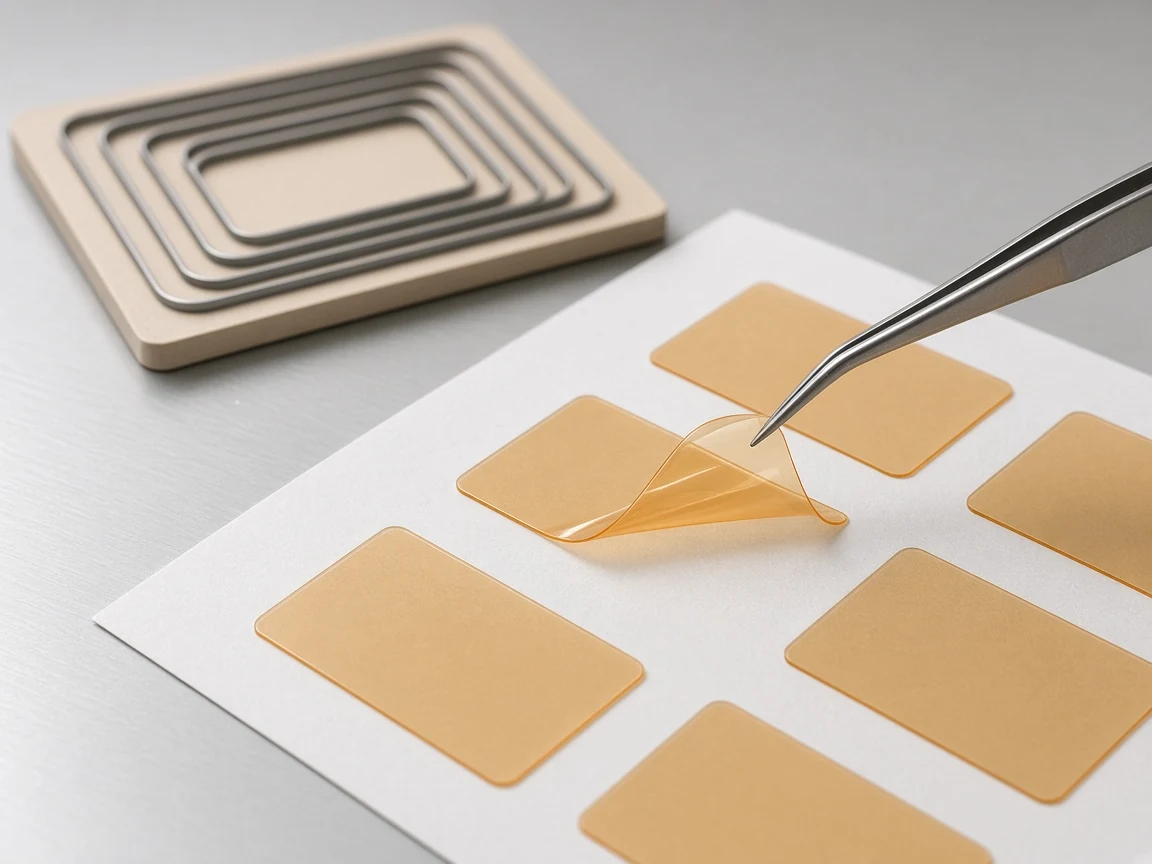
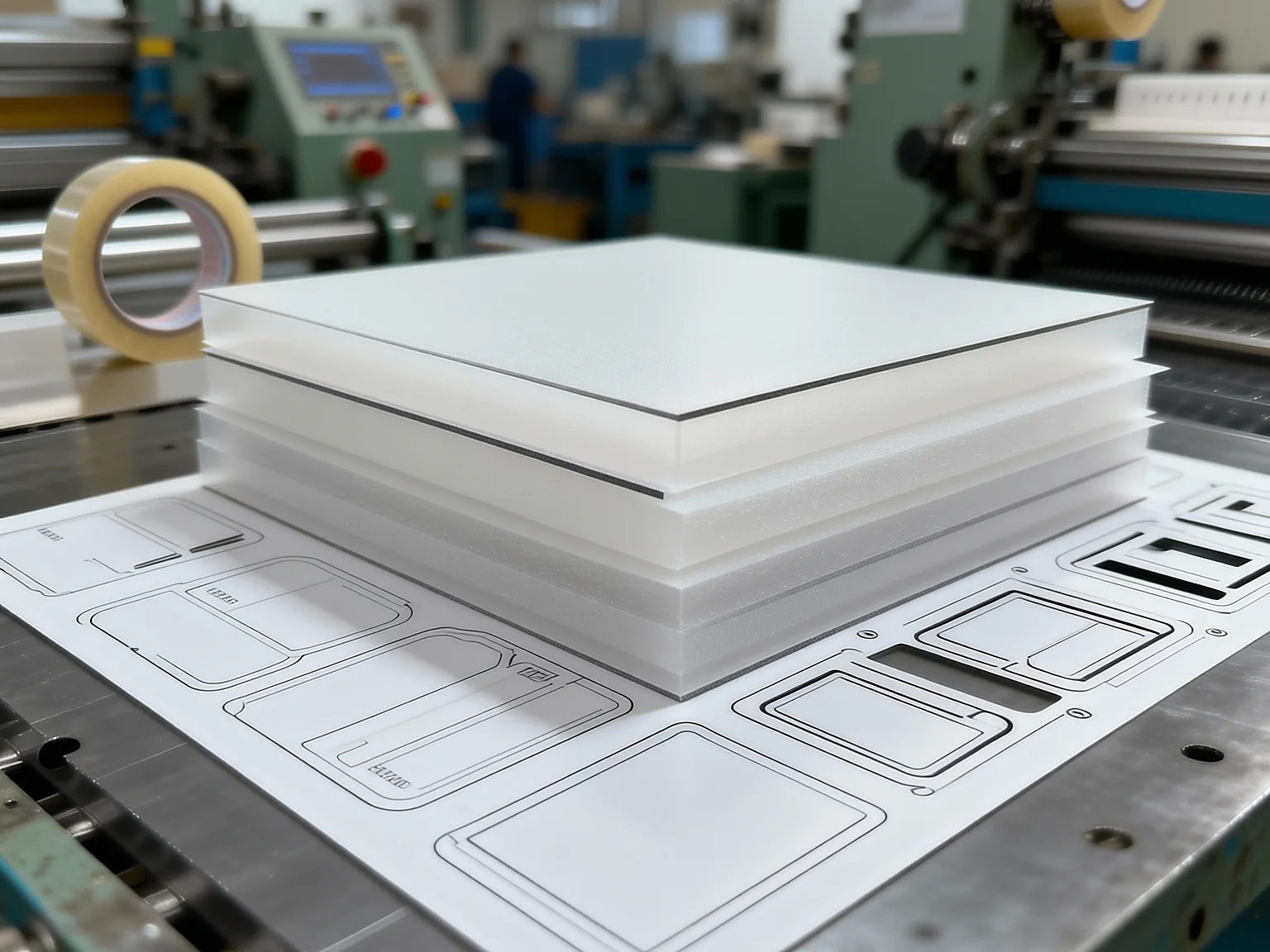
Shop floor & finished-part view
Shop-floor and finished die-cut stills—useful for comparing die edges and nested kiss-cuts.
How the process runs
Flatbed is the first of our six in-house processes. Below unpacks the overview so you can judge from the drawing whether this line fits.
Flatbed die cutting is straightforward: the steel-rule die mounts on a flatbed press and makes avertical stroke. Unlike continuous rotary web cutting, this is an up-down close—so sheet and roll both run. Sheet stock in hand can be cut; rolls can feed by width too.
One close can formouter frame, inner holes, and complex contourstogether—no separate outline then secondary hole work. Parts meant for peel-and-place on the line can also beKiss-cut: cut through the adhesive only, leave the liner intact, ship as a sheet, and peel to place as needed.
Nested arrays and shared edges save material, but leave enoughdie clearance, and planWaste strippingscrap paths first—if scrap won't clear, production stalls. Work this out with the drawing before tooling.
When to choose flatbed
When the same drawing can run flatbed or rotary, the difference is mainly volume and roll investment—we'll say so on the quote.
- Volume too low for an engraved roll, or sampling / small lots to prove the structure first
- Sheet supply; complex contours / inner holes in one hit
- Need kiss-cut, nested arrays, finger tabs, or other assembly-friendly forms
- Materials marked mature for flatbed in the overview matrix—foam, rubber, aluminum foil, etc.
- Long runs, annual contracts, ongoing replenishment—unit cost falls faster with volume
- Roll-to-roll continuous web, stable cycle time
- Willing to take the one-time engraved-roll investment, amortizable into unit price
- When volume is low we'll suggest flatbed or slitting instead
Rotary needs an engraved roll to print—a one-time investment; when volume is low, flatbed is cheaper. Detail → Rotary die cutting。
Kiss-cut & nested arrays
Kiss-cut depth is set with shims; nested arrays need clearance and scrap paths planned first. These two come up most often on flatbed quotes.
Kiss-cutCut adhesive only; leave the liner intact. Depth set with shims—must sample before production. Too deep breaks the liner; too shallow won't peel. Dial it in on first article before volume.
Nested / shared edgeSaves material, but die clearance and scrap paths come first. Too tight and knife lines interfere or scrap won't clear; too wide and waste climbs. Nesting is usually reviewed with the drawing.
Suitable materials & outputs
The same process behaves differently on different materials. The table summarizes common combinations on this page; in the overview matrix, double-sided tape, foam, film, rubber/silicone, metal foil, and fabric/mesh are all mature (●) for flatbed.
- Suitable materials
- Foam, rubber, double-sided tape, film, nonwoven, aluminum foil
- OutputForm
- Sheets, discrete parts, nested arrays, parts with finger tabs
- ConvertingBased on
- CAD drawings (DXF / DWG / PDF) or physical samples
- Kiss-cut
- Supported; depth set with shims—sample confirm before production
Output can be sheets, discrete parts, nested arrays, or parts with finger tabs for peel-and-place. No CAD? Ship a physical sample—we'll re-measure size and edge before sampling.
From drawing to first article
First three steps from the overview collaboration flow, focused on die-cut deliverables; production & packing → Capabilities overview。
Drawing / Sample
CAD files, sketch photos, or physical samples all work. No drawing? Ship a sample—we'll re-measure.
Review & quote
Material plan, tolerances, volume, lead time, and price in one reply. When volume is too low for an engraved roll, we'll suggest flatbed.
Sample approval
First-article size, edge, and kiss-cut depth confirmed before production—avoids batch rework. Typical lead time includes tooling and first-article approval.
FAQ
Flatbed / die-cut items drawn from the overview FAQ; full list on the capabilities page.
No drawing—only a sample. Can you still do it?
Yes. We can re-measure size and edge section, or tool from the sample directly. If the sample is an assembled part, share mounting location and conditions so we don't copy the outline and miss compression.
How is MOQ set?
Sampling from one piece; production MOQ depends on material and process—slitting by roll, die cutting by lot. Rotary needs an engraved roll, so the volume bar is higher than flatbed; if volume is low we'll suggest flatbed or slitting instead.
Typical lead time?
Usually 3–7 days, including tooling and first-article approval. Rush can compress some steps—first-article approval cannot be skipped.
Send a drawing,
see what we can do first.
Drawing + volume + lead time—we'll reply with a material plan, tolerances, and price. No drawing? Ship a sample or describe the conditions.