- Home
- Capabilities
- Precision slitting
Precision slitting
Full mother rolls slit to the widths you need—clean, burr-free edges—rewound as small rolls or stacked as sheets. When a full roll is more than you need, or the line only wants narrow strip, slitting is the leanest path—you don't pay full-roll width for strip you won't use.
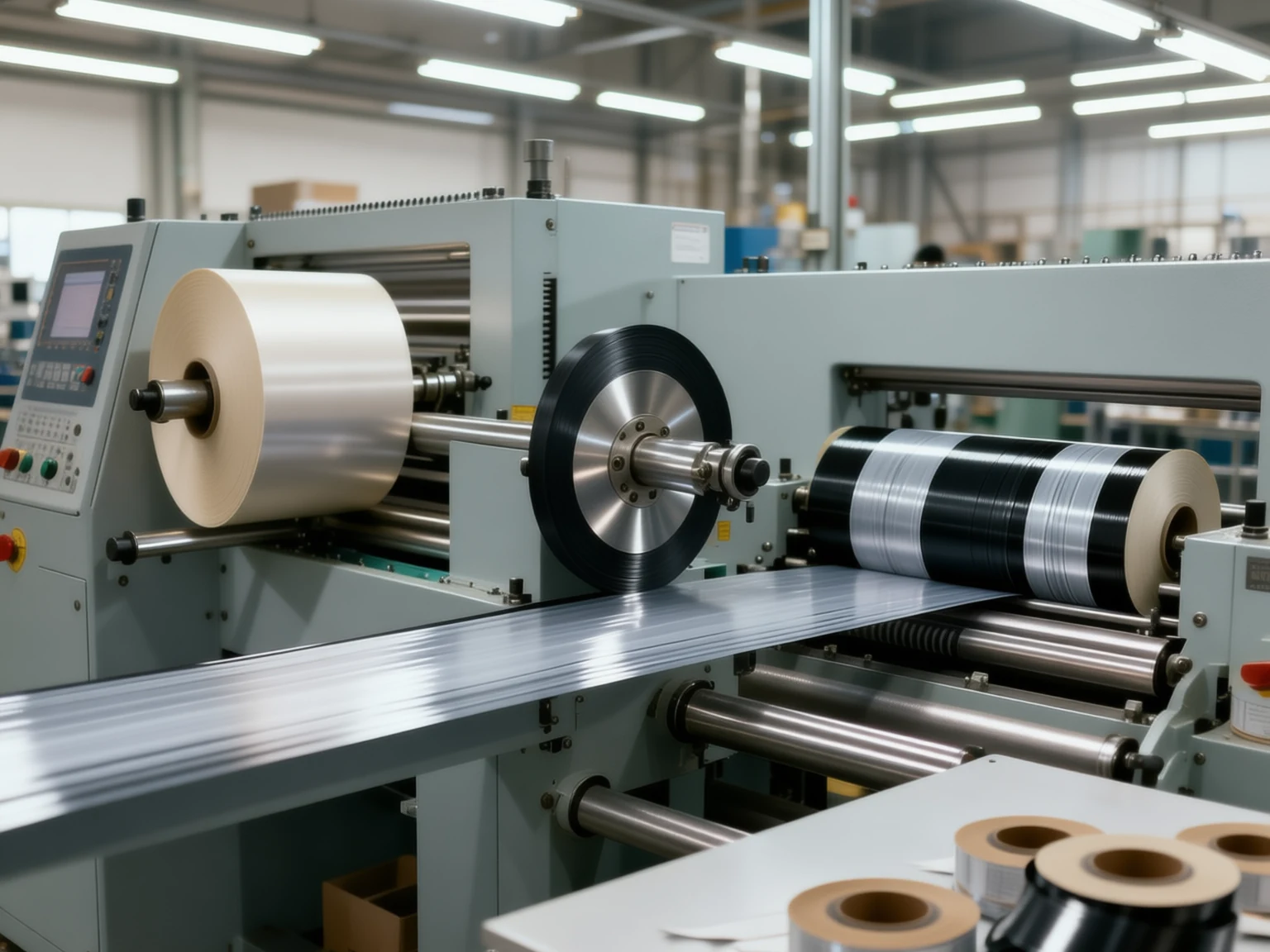
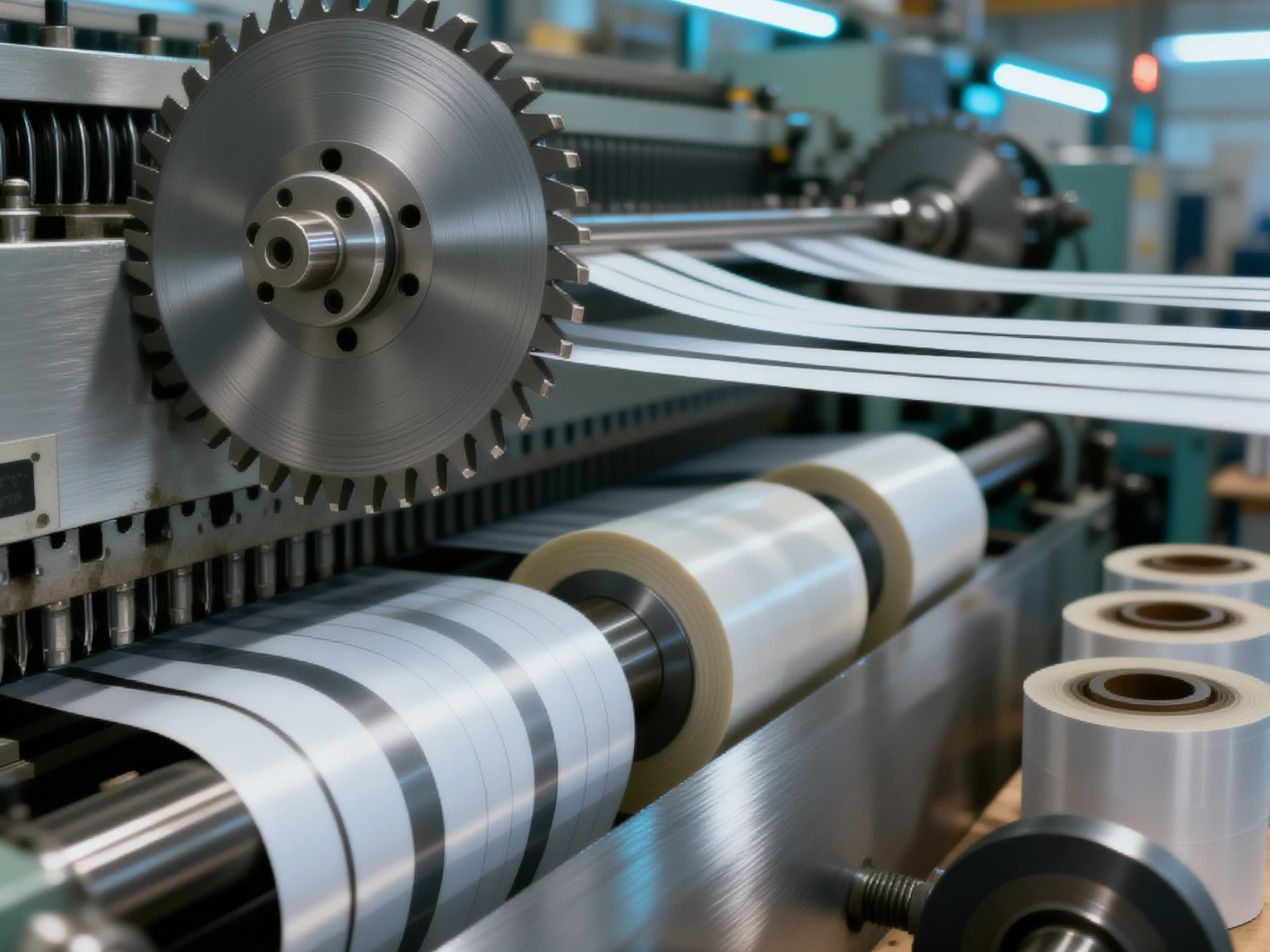
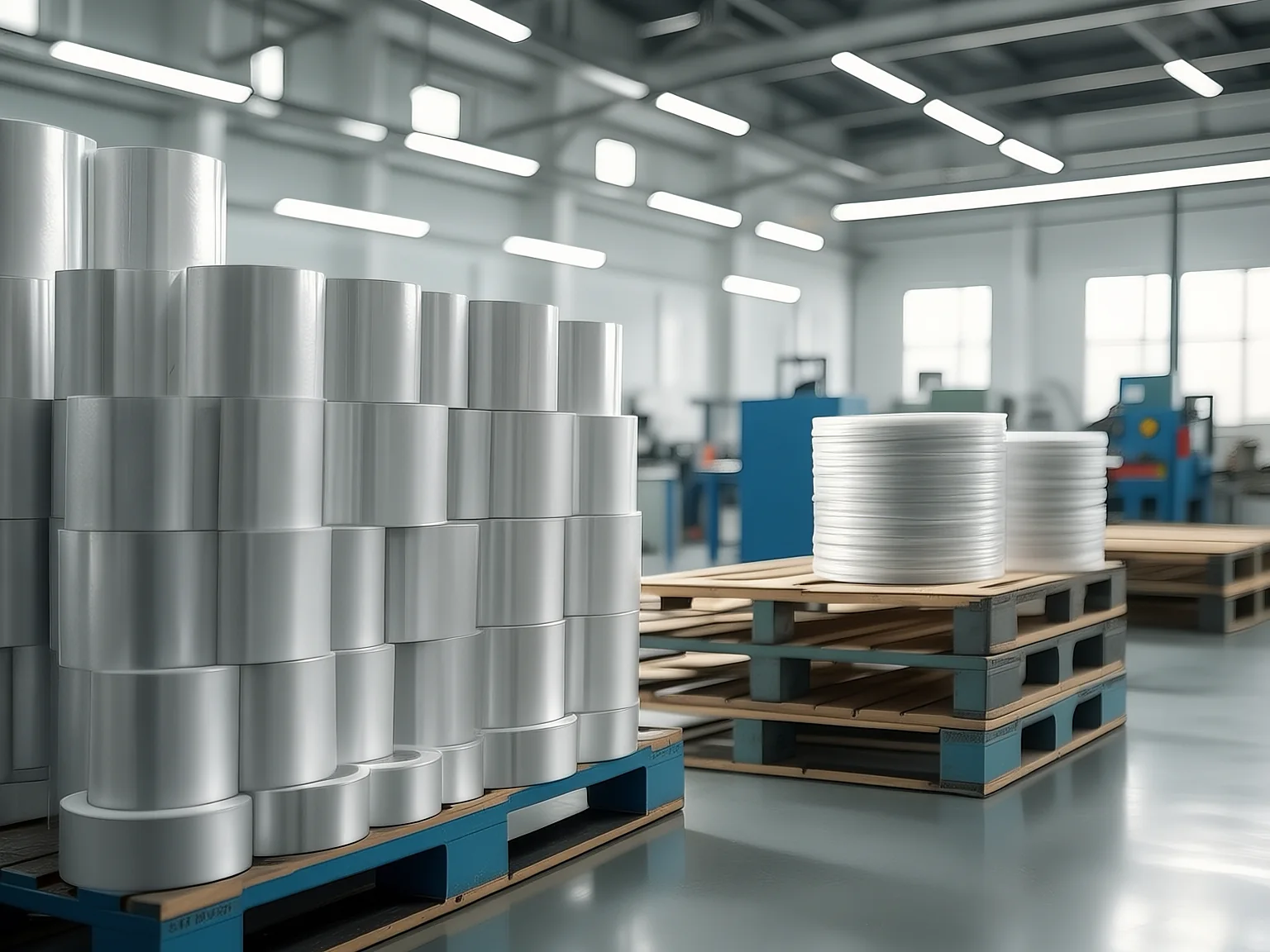
Shop floor & finished-part view
Automatic slitting-line stills—useful for comparing unwind, circular knives, and multi-spindle rewind.
How the process runs
Slitting is the most direct of the six processes—take width from the mother roll. Below unpacks the overview so you can decide whether to slit first, then die-cut.
Precision slitting starts with afull mother rollcut to the widths you needSlitting: knife banks cut to target width, edges must beClean, burr-free, then rewound as narrow rolls or stacked as sheets.
When you hold wide rolls but the line only wants narrow strip, slitting often beats feeding full width into die cutting—you don't pay for unused width, and downstream scrap drops.
Width is slit to need; the lower limit depends onmaterial and thicknessconfirm; cut method is also chosen by material to avoid fuzzy edges, sticking, or delamination that hurt later laminating and die-cut registration.
When to choose slitting
Slitting solves width and supply form; outlines, inner holes, and kiss-cuts still need die cutting.
- Mother roll too wide; the line only wants fixed narrow strip
- A full roll is more than you'll use—slitting by width saves material
- Straight-edge strip only—no complex contours
- Prep narrow rolls or sheets for downstream die cutting / laminating
- Need outer frame, inner holes, irregular contours
- Kiss-cut, nested arrays, finger tabs, and other structured parts
- Complex sheet blanking—not simple strip
- Volume and die / die-roll plans → flatbed or rotary
Width only, no outline → start with slitting; need contours → Flatbed die cutting or Rotary die cutting。
Edge burrs & tension
Ultra-narrow strip needs tension and knife-bank accuracy; edge burrs hit downstream laminating and die-cut registration.
Edge qualityis the visible pass/fail for slitting: burrs, filaments, and sticking travel downstream. Cut method follows the material—tape, foam, film, release liner, and metal foil each have better knives and settings.
Tension & knife bankmatter most on ultra-narrow strip. Unstable tension drifts width and misaligns ends; poor knife spacing or accuracy makes adjacent strips interfere and fuzz the edge.
Suitable materials & outputs
Most roll goods can be slit. In the overview matrix, double-sided tape, foam, film, metal foil, and fabric/mesh are mostly mature (●) for precision slitting; rubber/silicone is possible with review (○).
- Suitable materials
- Roll goods: tape, foam, film, release liner, metal foil
- OutputForm
- Narrow rolls (rewound), stacked sheets
- Width
- Slit to need; lower width limit confirmed by material and thickness
- Edge
- Clean, burr-free; cut method chosen for the material
Production is often quoted by roll; share target width, thickness, and downstream use so we can confirm the width is reachable.
From drawing to first article
First three steps from the overview collaboration flow, wording adjusted for slitting; production & packing → Capabilities overview。
Spec / sample
Target width, thickness, material grade, or physical mother-roll info all work. No written spec? Ship a sample—we'll confirm whether the target width is reachable.
Review & quote
Material plan, achievable widths, volume, lead time, and price in one reply. Production slitting is often by the roll.
Trial-cut confirmation
Confirm edge, width, ends, and rewind quality before volume—avoid discovering burrs after a full roll is put away.
FAQ
Rewritten from the overview FAQ for slitting; full list on the capabilities page.
How is MOQ set?
Sampling can be a small trial cut; production MOQ depends on material and process—slitting by roll, die cutting by lot. Share target width with mother-roll width so we can estimate utilization.
Can you convert only, with our material?
Yes. Consignment converting and full supply both work. For consignment slitting we confirm the material suits the target width and cut method first—some shed debris or delaminate at the edge; we'll flag that early.
Typical lead time?
Usually 3–7 days, including confirmation and first article / trial cut. Rush can compress some steps—edge and width confirmation cannot be skipped.
Send a spec,
we'll see if the target width is reachable.
Width + material + volume—we'll reply with feasibility, edge approach, and price. Mother-roll info or samples both work.