- Home
- Capabilities
- Blanking & gaskets
Blanking & gaskets
Seals, cushions, and shielding parts—from drawings or sample replication. They look simple; success is usually material selection—compression, recovery, temperature, and media resistance. A perfect die won't seal if those are wrong. We ask about conditions before recommending material.
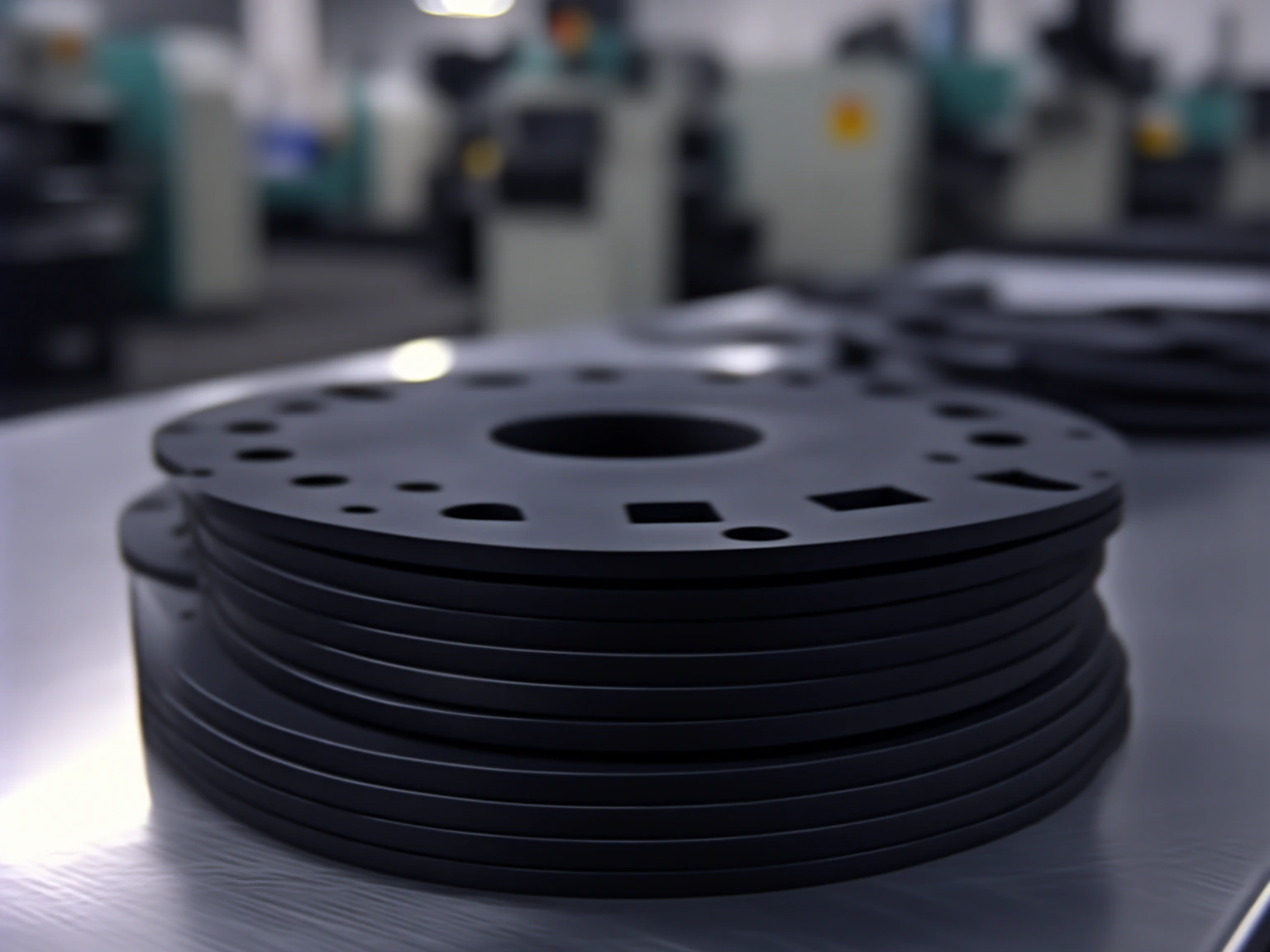
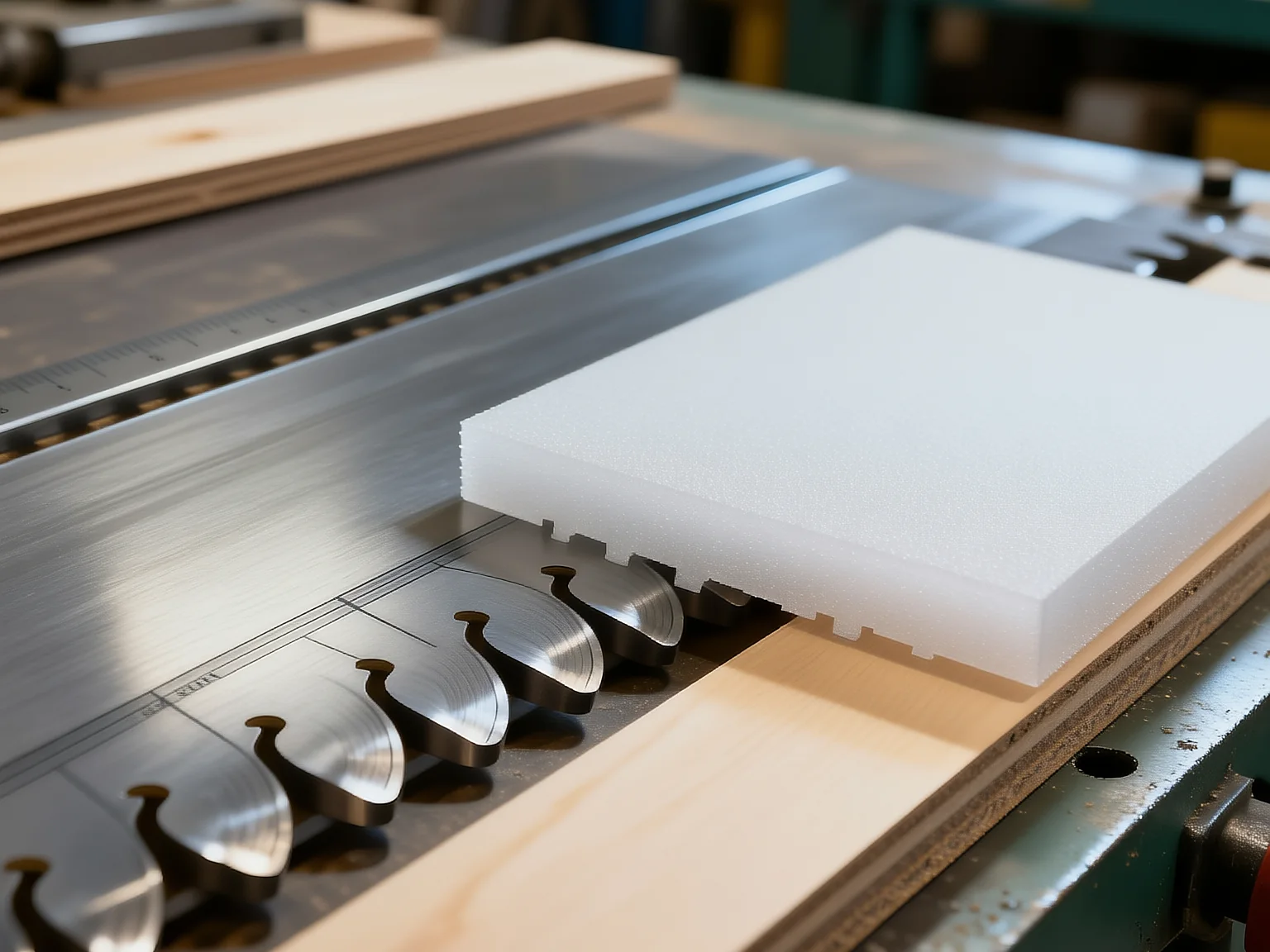
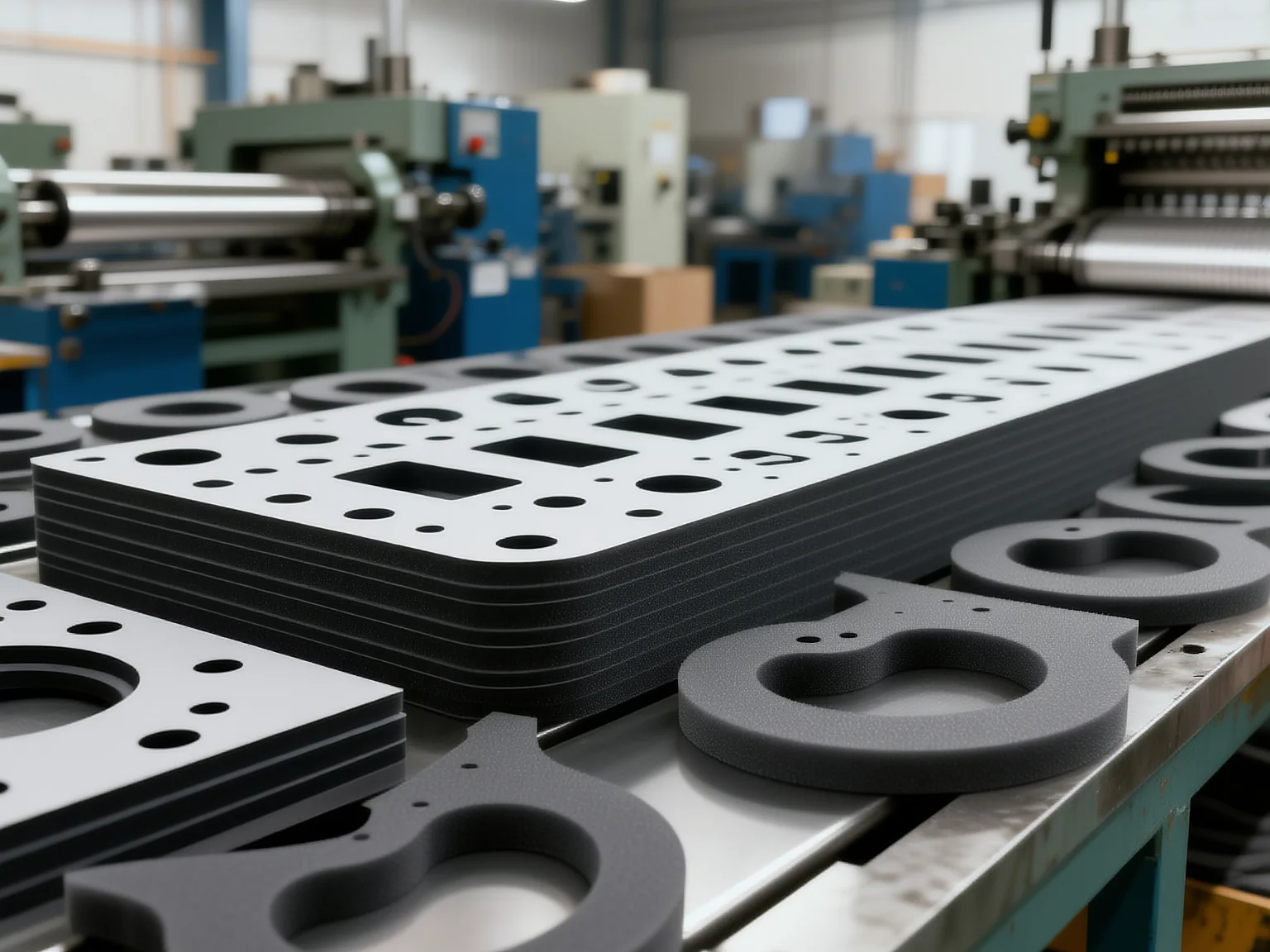
Shop floor & finished-part view
Shop-floor and blanked-gasket stills—useful for comparing die edges and seal geometry.
How the process runs
For blanking and gaskets, the outline isn't the hard part—aligning conditions with material selection is. Below expands the overview in plain terms.
Seals, cushions, and shielding parts can be madefrom drawings, orreplicated from samples —no CAD? Ship a sample and we'll re-measure. Output can be discrete parts, nested arrays, or parts with locating holes for assembly.
These parts look simple; success usually hinges onMaterial choice: wrong compression, recovery, temperature, or media resistance means even a perfect die won't seal or cushion. Weask about conditions before recommending material, instead of tooling the outline alone.
Versus general flatbed die cutting, gasket quotes lean harder on condition data (media, temperature, compression space, shielding needs, etc.). IP-related needs require installation verification—a single part isn't the same as a system rating.
When blanked gaskets are the right path
When sealing / cushioning / shielding conditions matter, get the material right first; pure outline sheet work can follow the flatbed page.
- Seals, cushions, shielding parts with clear condition parameters
- Compression, recovery, temperature, and media resistance drive selection
- Replicating a gasket from sample, or parts with locating holes
- Foam, rubber, silicone, non-asbestos and other common gasket stocks
- Complex outline / kiss-cut only, no sealing focus → see flatbed
- Long-run continuous blanking on roll stock → evaluate rotary
- Small parts for pick-and-place / carrier tape → see spooling & taping
- Material undecided and no condition data → fill conditions before tooling
Outline and kiss-cut detail → Flatbed die cutting; small-part taping → Spooling & taping。
Conditions & material selection
IP rating is a system result, not a single-part parameter; we guarantee material and dimensions—seal performance needs installation verification.
Ask conditions first: media contact, operating temperature, compression space, conductivity/shielding needs, repeated disassembly. Those decide foam, rubber, silicone, film, metal foil, or non-asbestos routes.
Critical parametersLand on compression, recovery, temperature, and media resistance. Perfect size with the wrong material still fails sealing or cushioning; first-article should check size and material behavior—not outline tolerance alone.
Suitable materials & outputs
In the overview matrix, foam, rubber/silicone, and metal foil are mature (●) for blanked gaskets; double-sided tape, film, and fabric/mesh are possible with review (○).
- Suitable materials
- Foam, rubber, silicone, film, metal foil, non-asbestos
- OutputForm
- Discrete parts, nested arrays, parts with locating holes
- ConvertingBased on
- Drawing or sample (dimensions can be re-measured)
- Critical parameters
- Compression, recovery, temperature, media resistance
Bring condition data to the quote: media, temperature, compression needs, assembly method. If the sample is an assembled part, share mounting location so we don't copy the outline and miss compression.
From drawing to first article
First three steps from the overview collaboration flow, wording adjusted for gaskets / conditions; production & packing → Capabilities overview。
Drawing / Sample
CAD, sketches, or physical samples all work. For assembled parts, share conditions and mounting location so we don't copy the outline alone.
Review & quote
Material plan, tolerances, volume, lead time, and price in one reply. Selection starts by aligning compression, recovery, temperature, and media resistance.
Sample approval
First-article size and edge confirmed before production. Sealing applications should be verified on the assembly—don't conclude from part size alone.
FAQ
Rewritten from the overview FAQ for gaskets; full list on the capabilities page.
No drawing—only a sample. Can you still do it?
Yes. We can re-measure size and edge section, or tool from the sample directly. If the sample is an assembled part, share mounting location and conditions so we don't copy the outline and miss compression.
Can you guarantee an IP rating?
IP rating is a system result, not a single-part parameter. We guarantee material and dimensions; seal performance needs installation verification.
Typical lead time?
Usually 3–7 days, including tooling and first-article approval. Rush can compress some steps—first-article approval cannot be skipped.
Send conditions and drawings,
we'll start with material selection.
Drawing / sample + conditions + volume—we'll reply with a material plan, tolerances, and price. Seal performance needs installation verification.